
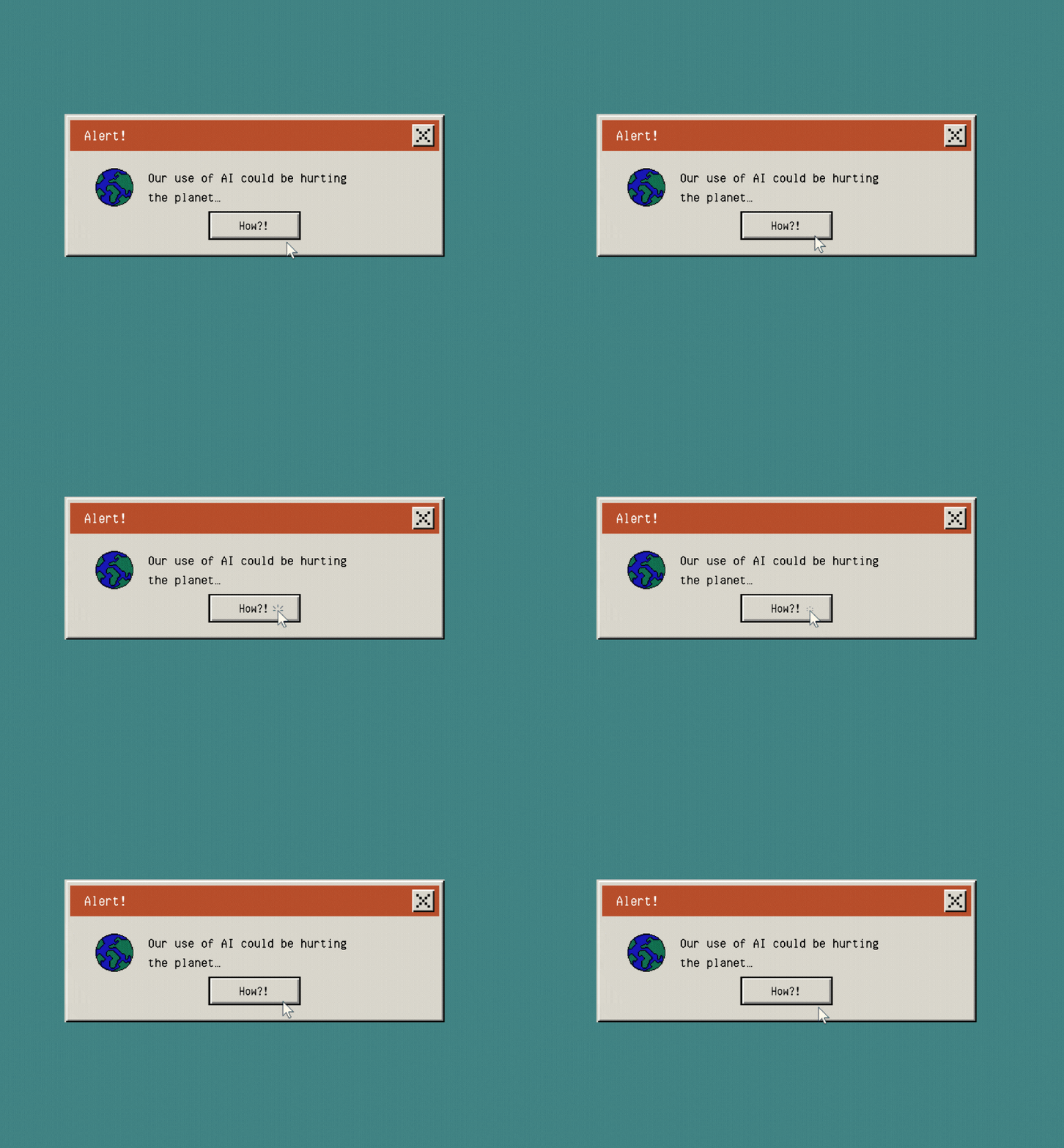
Artificial Intelligence has quickly become a hot topic of discussion in every sphere of our lives. AI is an exciting new development taking the world by storm because of the speed at which it is changing and progressing. For Shirin Choudhary, the relentless deluge of news of technological progress has been dizzying to say the least – and catching up with it seems like a chore sometimes. Here, they try to unpack some of these developments, concerns and ideas together to catch a glimpse of what AI could mean in a changing climate and environment in the coming years.
Artificial Intelligence, to begin with, refers to technology that uses machine-learning models to process large amounts of data and make predictions based on those. For example, something as simple as text prediction while someone is typing to more complicated uses such as analysing data from aircrafts to detect maintenance needs can be done with the help of AI. Generative AI, on the other hand, goes further to create new data, and learns to generate more objects. ChatGPT is a popular example of GenAI now being used widely for various purposes.
AI and the environment: what’s the use?
Data, if collected and understood well, can tell us a lot about our natural world. In the context of climate change and environmental degradation, AI can be leveraged to develop early warning systems for natural disasters so that people and systems affected by them can prepare themselves for oncoming disasters. Google’s flood forecasting initiative uses AI models to forecast floods using publicly available data sources and warns organizations and governments of oncoming floods. Though it does not cover all countries yet, the project is scalable and cited as a potential use-case of AI in disaster early warning systems by the UN Disaster Risk Reduction agency. Private companies are now developing AI and robots to manage and sort recyclable plastic waste, helping local governments to reduce costs and make the recycling process more accurate and efficient.
What’s the catch?
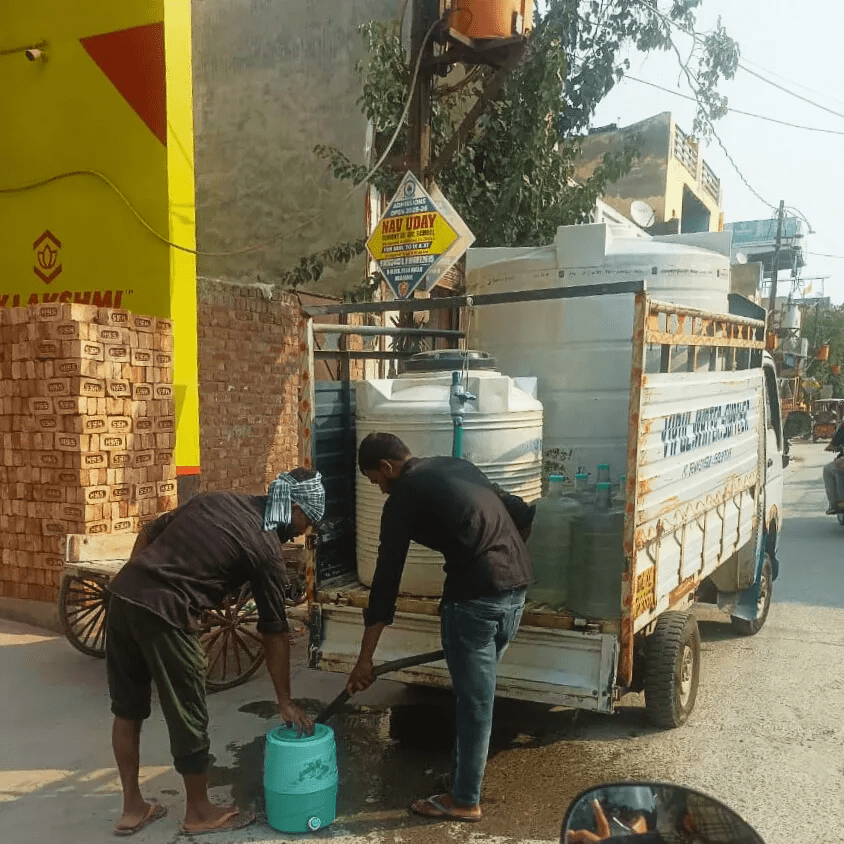
All this is well and good, but AI doesn’t come without its own set of environmental threats. AI, especially the expansion of GenAI requires the processing of very large amounts of data to deliver the best results. Processing billions of data entries requires a lot of resources – in the form of computer servers, the energy to run them, and water to cool them. Countries around the world, including India, are expanding the construction of “data centers” to run these data and machine learning models. These are nothing new – but are expanding because of the growing use of AI in every sphere of life. Data centers are incredibly energy-hungry – in the United States, all the data centers combined use up the energy of approximately 80,000 households. They also use a lot of water resources too, often diverting drinking water from local residents which is then treated with chemicals and rendered unfit for consumption after they are done with it. While exact numbers are not available, some estimates say that in Bangalore and Mumbai alone, 7.38 million and 9.78 million litres of water are used by data centers every day.
Data centers in India are no different. In a country with highly unequal and unstable electricity access, data centers currently account for 2% of India’s total power consumption. This is only going to increase in the coming years as India aims to construct more data centers in the future due to major companies such as Google and Amazon expanding their activities here. This poses alarming sustainability risks as coal still accounts for 75% of India’s power generation. In the developed world, tech giants are exploring nuclear energy as an option to power data centers, which poses its own set of risks in terms of nuclear waste management and potential disasters.
Looking past the smokescreen
The smokescreen of AI is such that it makes many people feel they are not qualified to talk about it. Shrouded in highly technical jargon, news about developments in AI and its environmental impacts can be inaccessible to most people who are outside the tech bubble. But it is something that impacts our communities, cities and villages, often without our consent and knowledge. Talking about it and sharing information about it is the first step towards empowering ourselves and advocating for decision-making in the space of AI to be more democratic. I feel the need to say that even while writing this article, it wasn’t very easy to measure the actual environmental impact of data centers in India. While there is emerging knowledge about this topic, information about the actual power and water consumption of data centers is often scattered and not always easily available – making the whole process of accountability more opaque.
AI can be used in revolutionary ways that help communities empower themselves. Democratizing AI is important, which is why many working in the AI space today are exploring developing AI in local, indigenous languages around the world. In Brazil, the AI tool Tainá is being built with indigenous people of the Amazon to preserve indigenous knowledge about the environment, oral histories, traditional medicines and culture. Tainá is community-owned and stored locally, not in the cloud, thus greatly reducing its carbon footprint. It gives us an example of AI that is revolutionary for both the community and can be used sustainably: something that we should definitely have more of.


 greenqueerfutures.org
Leave a comment