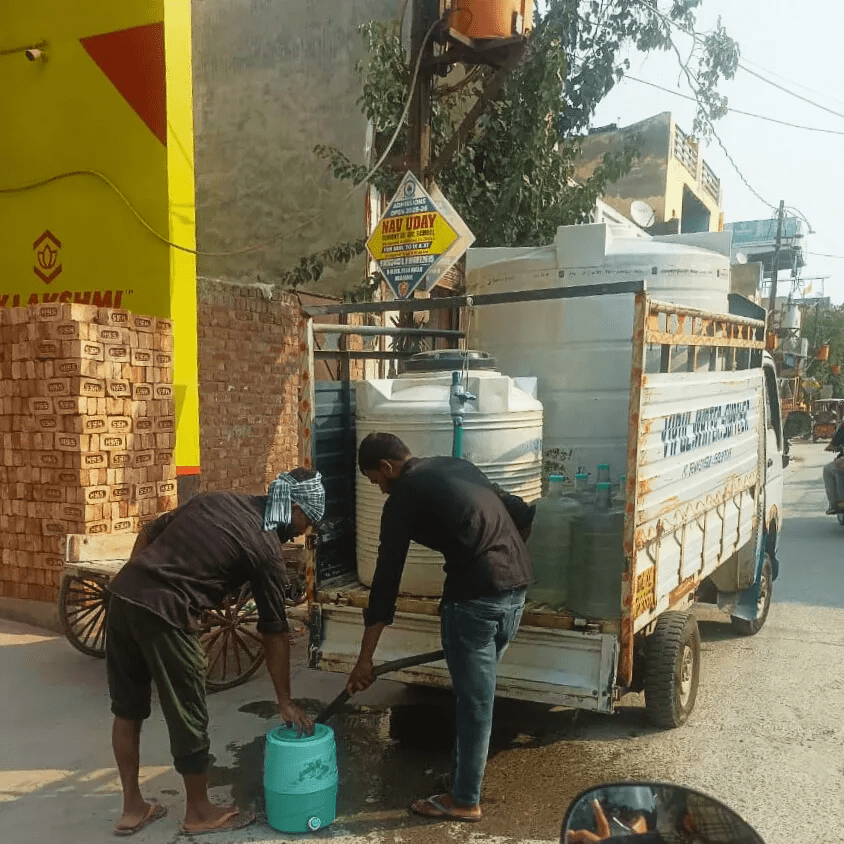
In Bangalore, you often hear the locals tell you about how the weather has changed: “Twenty years ago, we never had to use fans during the summers; ACs were not even a thing then, but now, the heat is unbearable and the monsoon causes so much damage.” – such everyday narratives are a testament of our changing climate. Bangalore alone has witnessed urban flooding yearly and is now even witnessing water scarcity during the drier months, these two extremes in a span of a few months. The IPCC 2023 report attributes climate change to having already irrevocably impacted a large percentage of the global population – half of the world population suffers through water scarcity for at least a month annually, and higher temperatures have increased cases of vector-borne diseases that are weighing down a fragile health system, A recent CSE report mentions that over 3000 people in India, in this year alone (first nine months) have died due to climate-related disasters, and extreme weather events have become more frequent this year. There is no denying these facts (unless you’re a climate denier), but how does one process them? Sometimes, reading just facts cannot reconcile the depth of the crisis – listening to or reading stories from people about how they are experiencing climate change connects to a more discernible truth.
Stories matter. Within the social/development sector, we often encounter resilience narratives as a form of storytelling that is assumed to be impactful. climate resilience narratives humanise the impact of climate change – just like the stories of locals in Bangalore describing how they’ve had to cope with changing weather patterns and heat. Resilience carries a lot of weight in this sector – the ability to adapt, bounce back, recover, and rebound. Building resilience is an essential ingredient within climate adaptation and mitigation strategies, and while current climate policies attempt to create such strategies that would make communities and geographies resilient, they also recognise community-based resilient practices. Resilient narratives in turn tell the audiences about these attempts; they are a powerful way to communicate what’s happening. These narratives are not only about how institutionalised policies have made communities stronger but tell us that for vulnerable populations impacted by climate change, resilience is the only option available.
However, a few scholars have questioned our dependency on resilience within the public sphere. Shakunta Banaji in particular casts doubt on the way resilience is celebrated, and “bouncing back” is seen positively. She claims that centring resilience in such a way would do more harm than good – ” Pushing a system too far, again and again, to profit from it, does not lead to further resilience; it leads to destruction and untimely death.” That continuous neglect from leaders and government policies to address the climate crisis is why we are where we are must not be forgotten. Resilience is only one way of seeing things despite these failures.
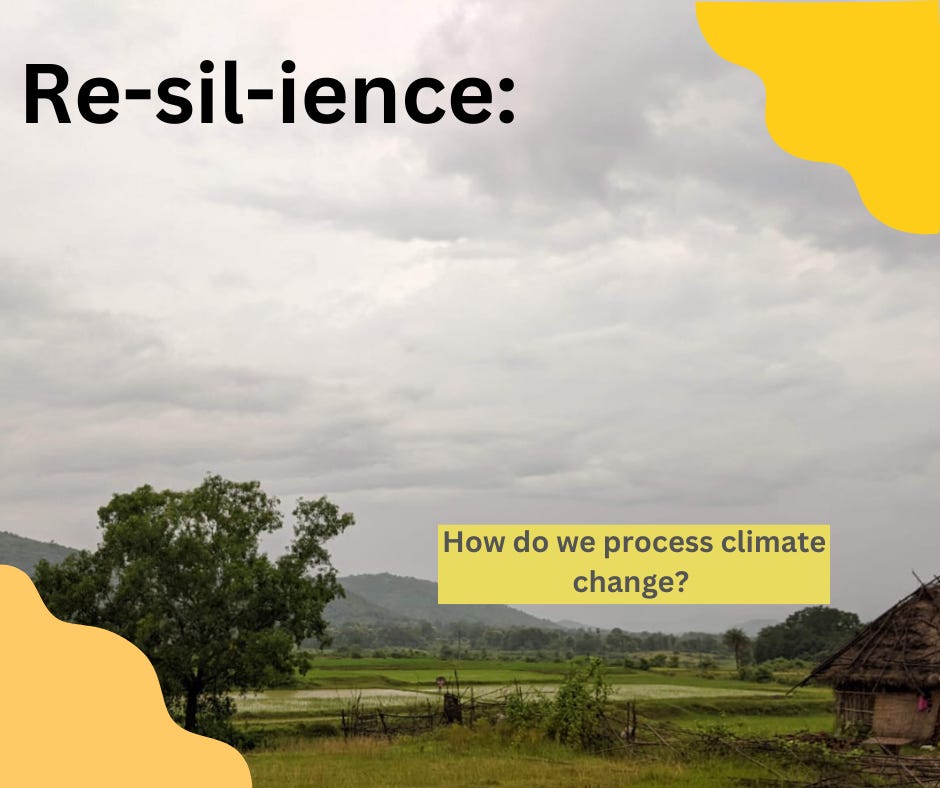
So what more do I get out of reading these stories? Climate change might be a scientific term but it is also more complex than that. Changing weather patterns affect the everyday, our mundane everyday that hopes to live out our lives till we cease to exist. These stories give meaning to the numbers – they tell us that people are living every day and some are impacted more than others. You probably will not hear a story of resilience from a billionaire (imagine that). These stories are about community-led initiatives to bring awareness and push climate action, individuals who have suffered through floods, and droughts and tell you how it impacts them, and Indigenous communities who regularly experience forest fires showing early prevention methods. During my time as a field researcher in Odisha, I have documented how communities come together to protect their forest by ensuring a network of communication in case of emergencies. For them, collective participation is key to navigating disasters.
I would argue that resilient stories take you one step further by imagining possibilities. We face a considerable challenge when thinking about climate change because we have to confront a “what will be of us?”.We read the news and think about how in our own lifetime, the weather patterns have drastically changed, older generations will tell us about how it was in the past – through the doom and gloom, many in our generation are experiencing what is termed climate anxiety, our imagination as a collective is stuck – what will be?. But climate resilience stories offer a window of possibility and we cannot afford to lose out on that. Stories give meaning and when we continue to tell stories about resilience, we continue to persist and build our collective future.
 greenqueerfutures.org
Leave a comment